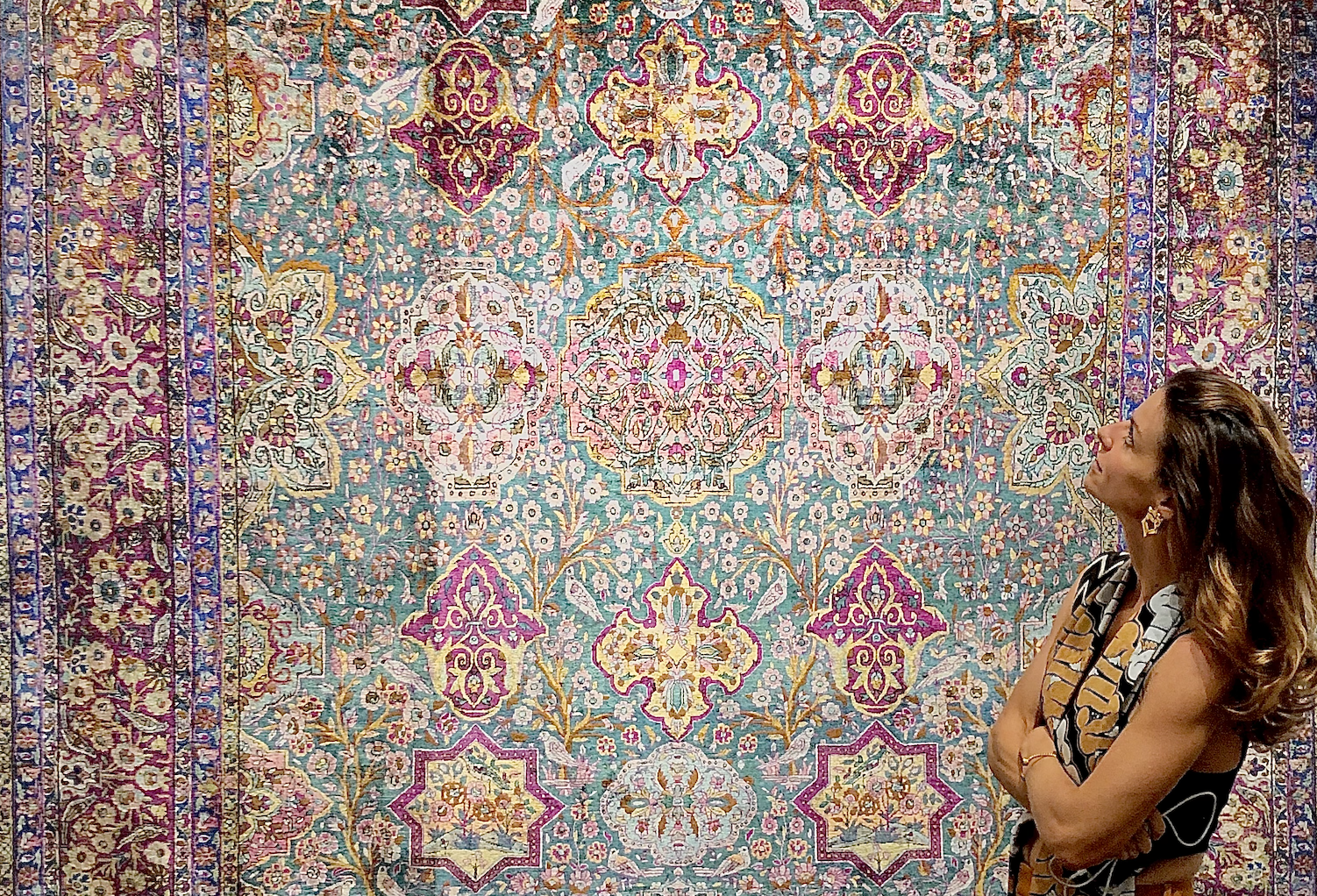
Antique Textiles Collection
Contact me for private showings
Over the past fifteen years that I have lived in Asia, I have assembled a collection of antique textiles from the Golden Triangle and the Malay Archipelago. These pieces were part of everyday life and sacred moments, used to carry babies, accompany ceremonies, mark transitions, and embody protection, belief, and belonging.
What draws me to these textiles is not only their beauty, but the lives they have held. They reflect landscapes, animals, ancestral cosmologies, and social bonds, woven into cloth and passed from one generation to the next. Time has softened them, but also deepened their presence. Today, I see these textiles as quiet witnesses, when they enter a space, they carry memory and meaning with them, a continuity of human experience that can still be felt, even far from their place of origin.
Below is a visual index offering a glimpse into the forms, techniques, and cultural worlds represented within the collection.
V
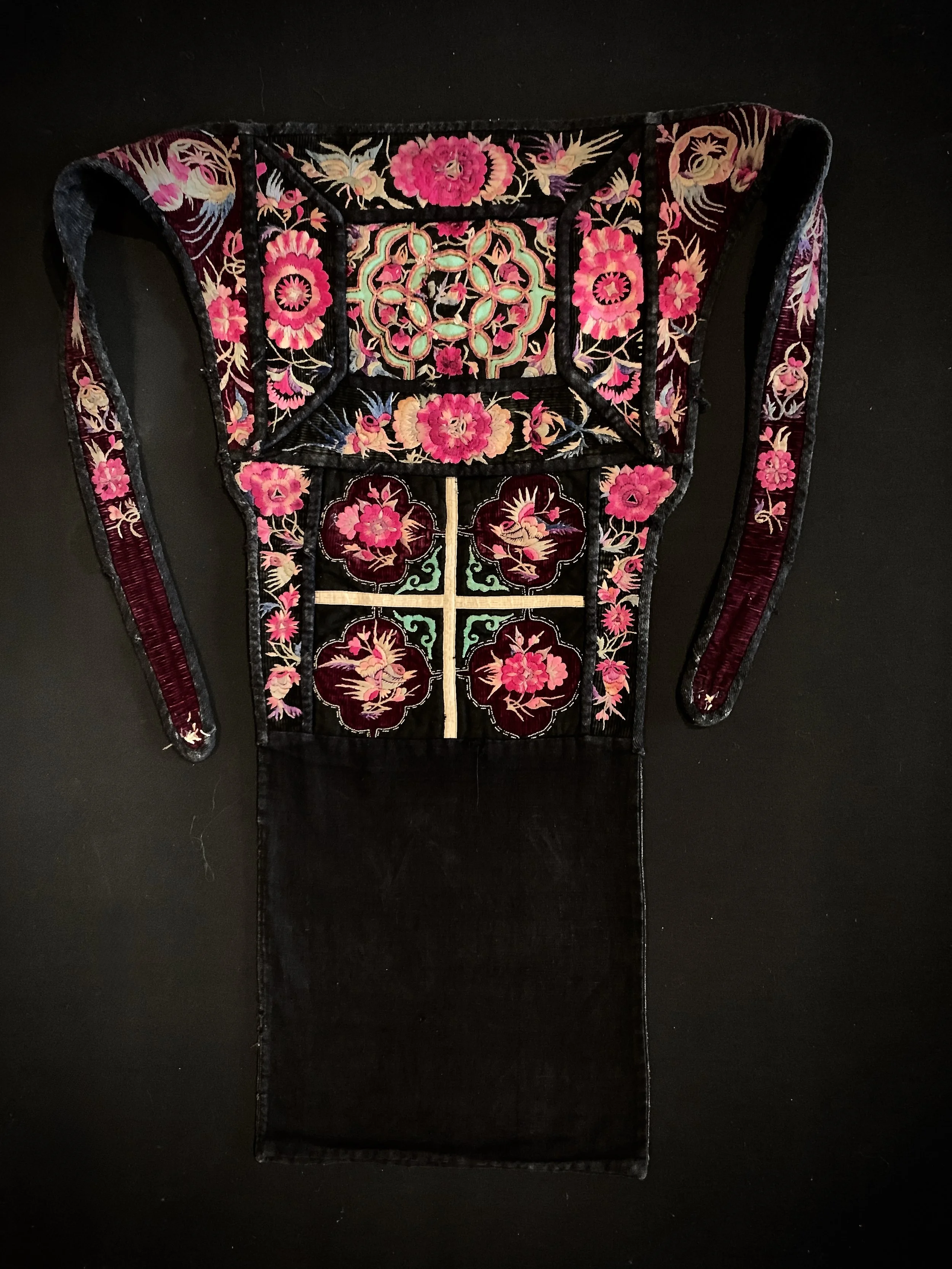
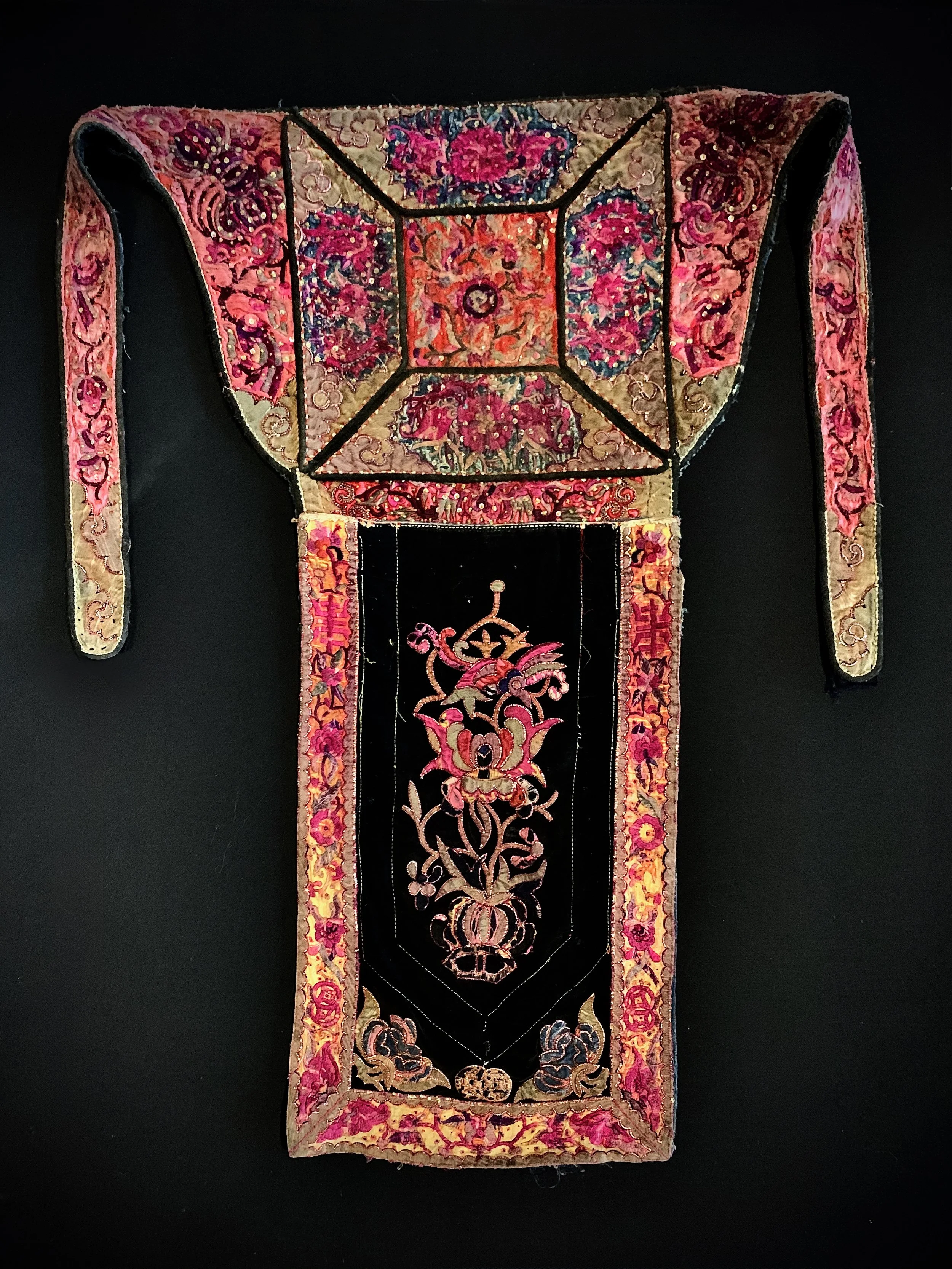
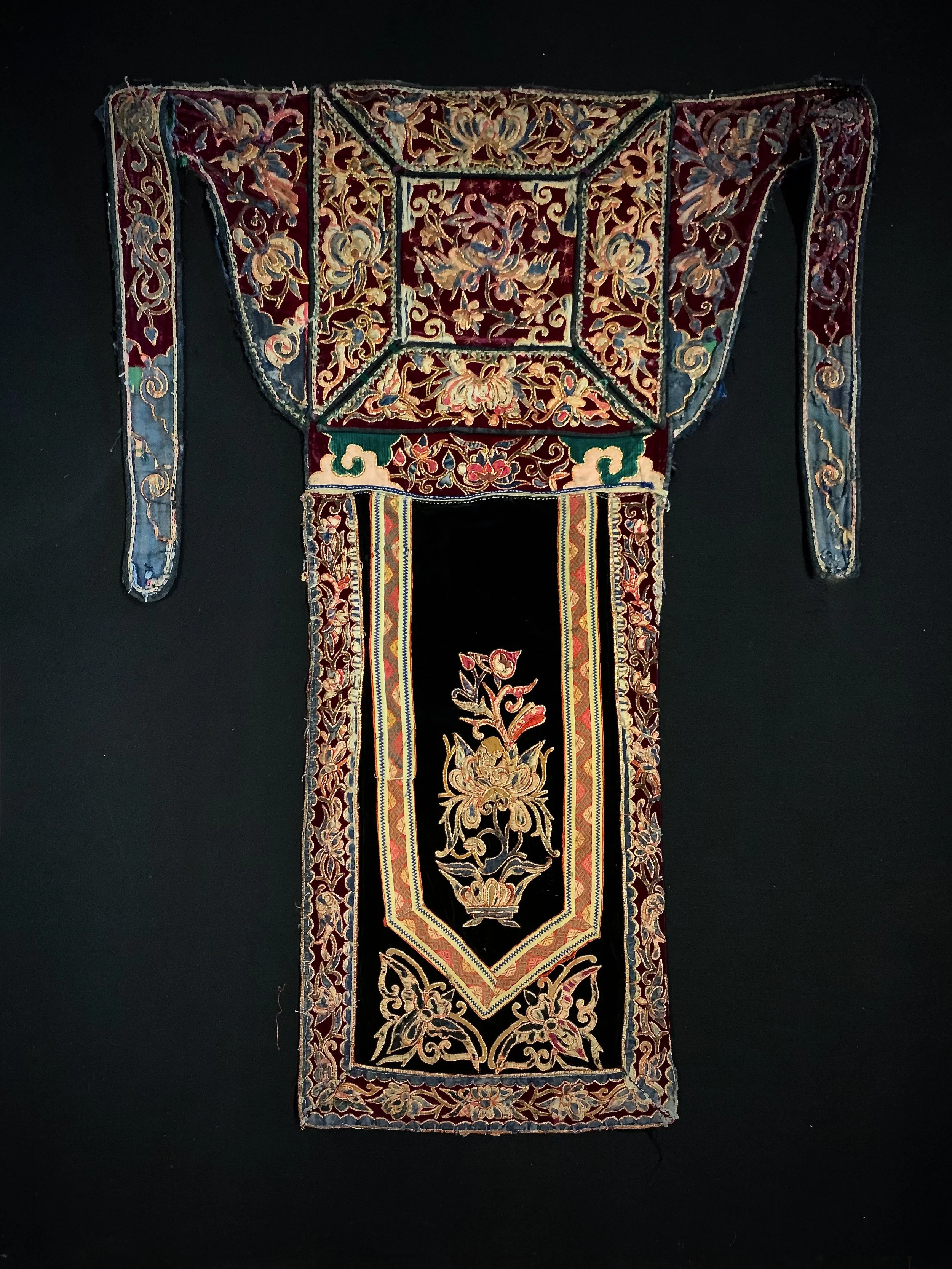
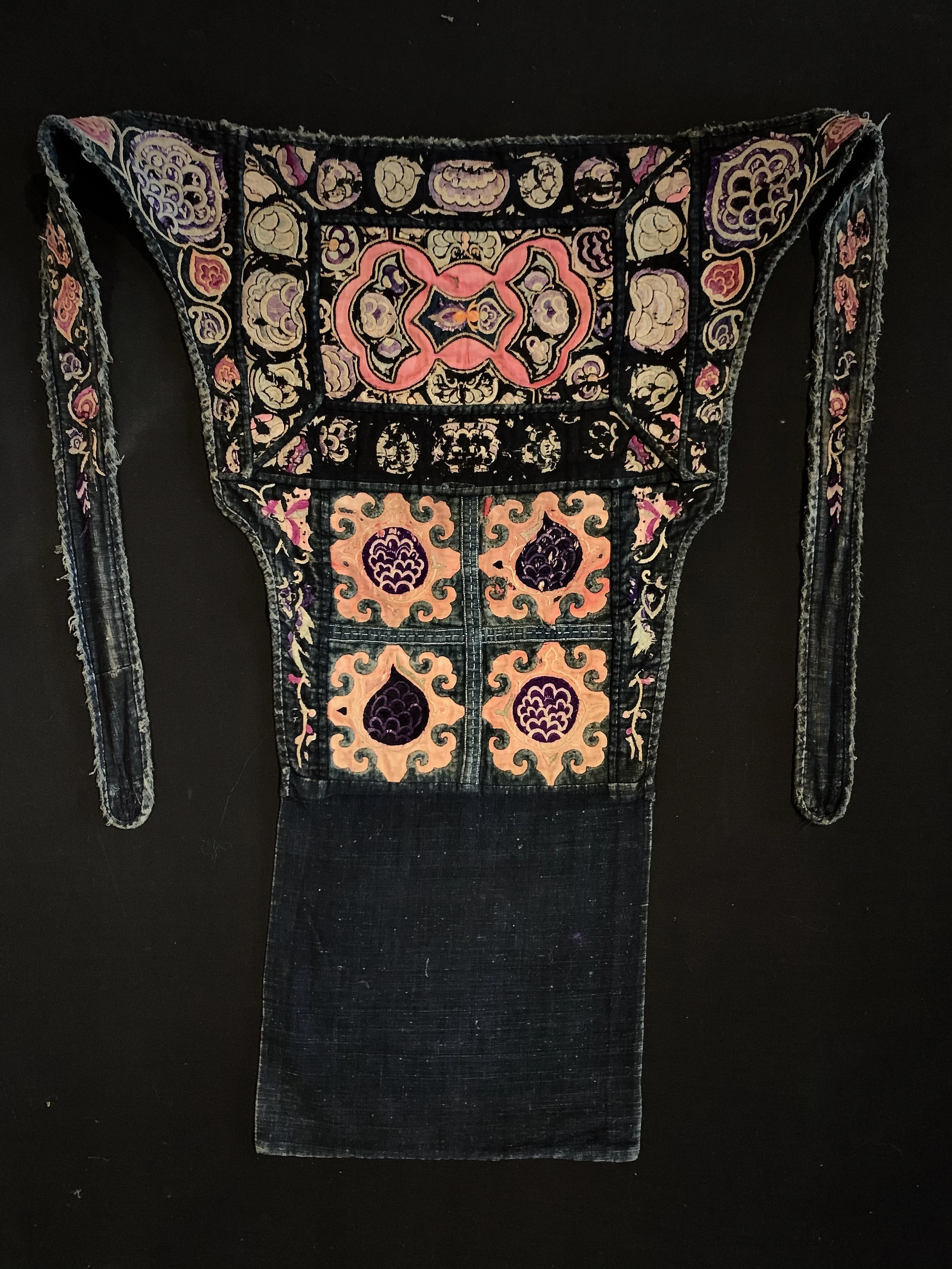
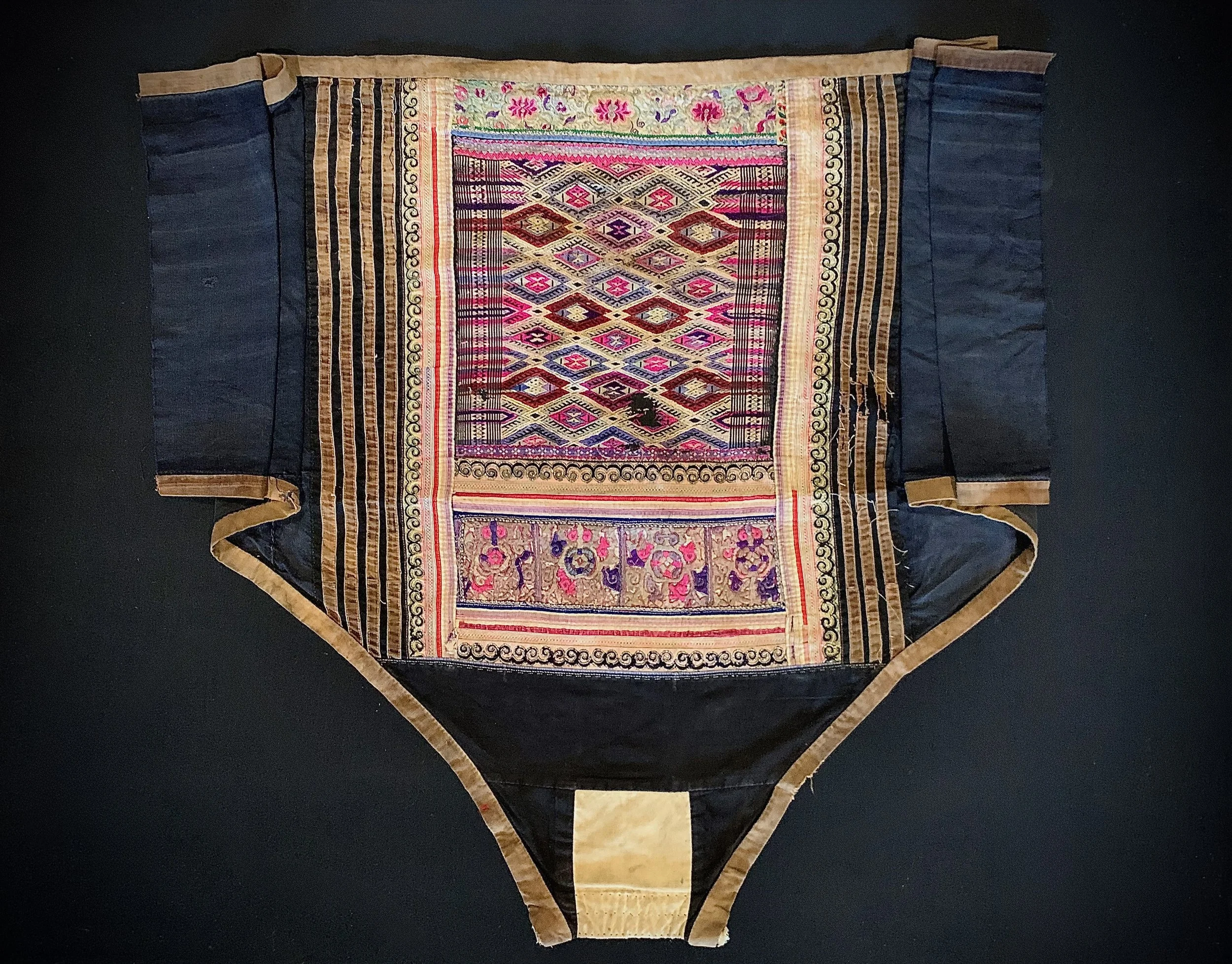
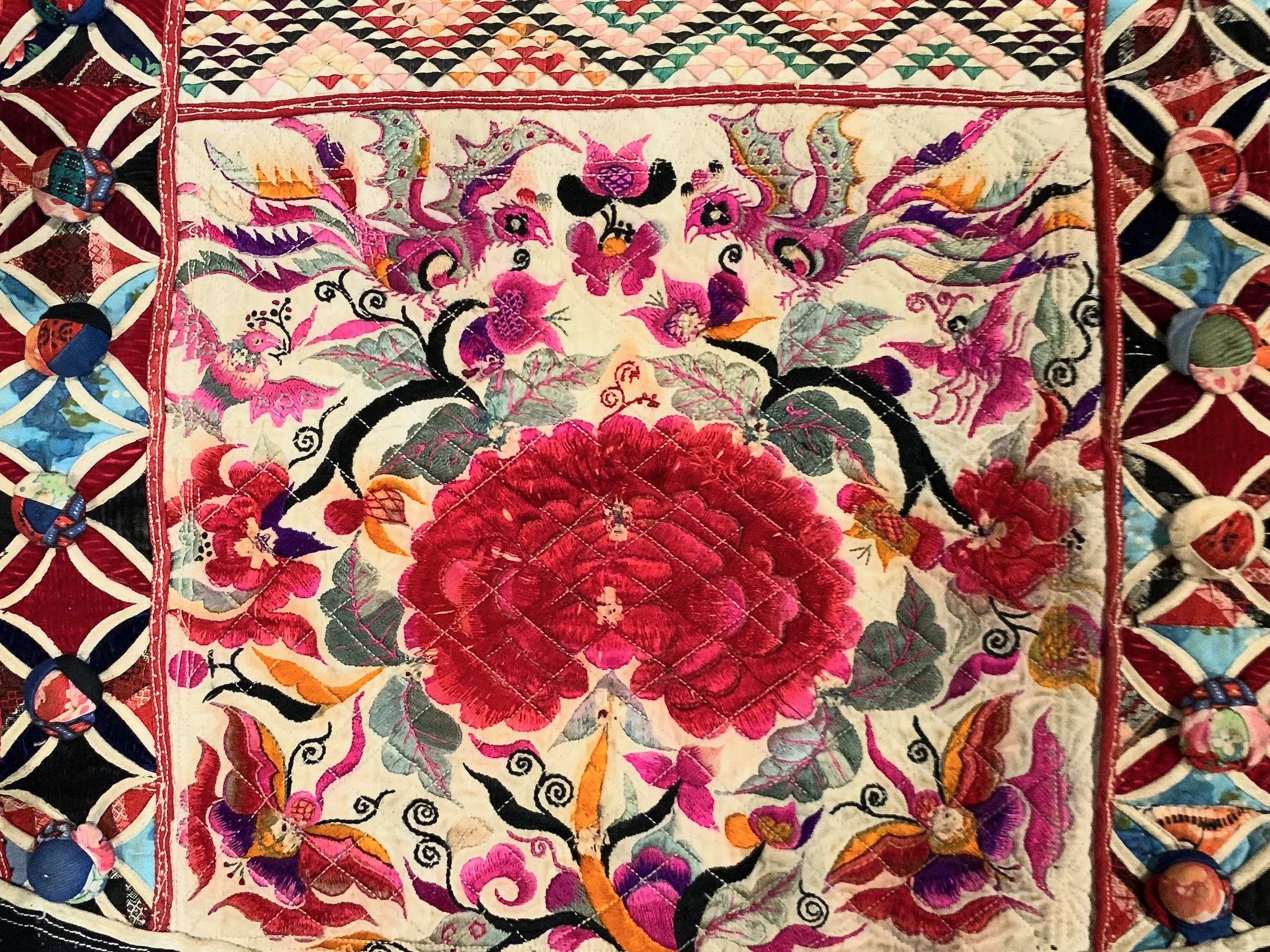
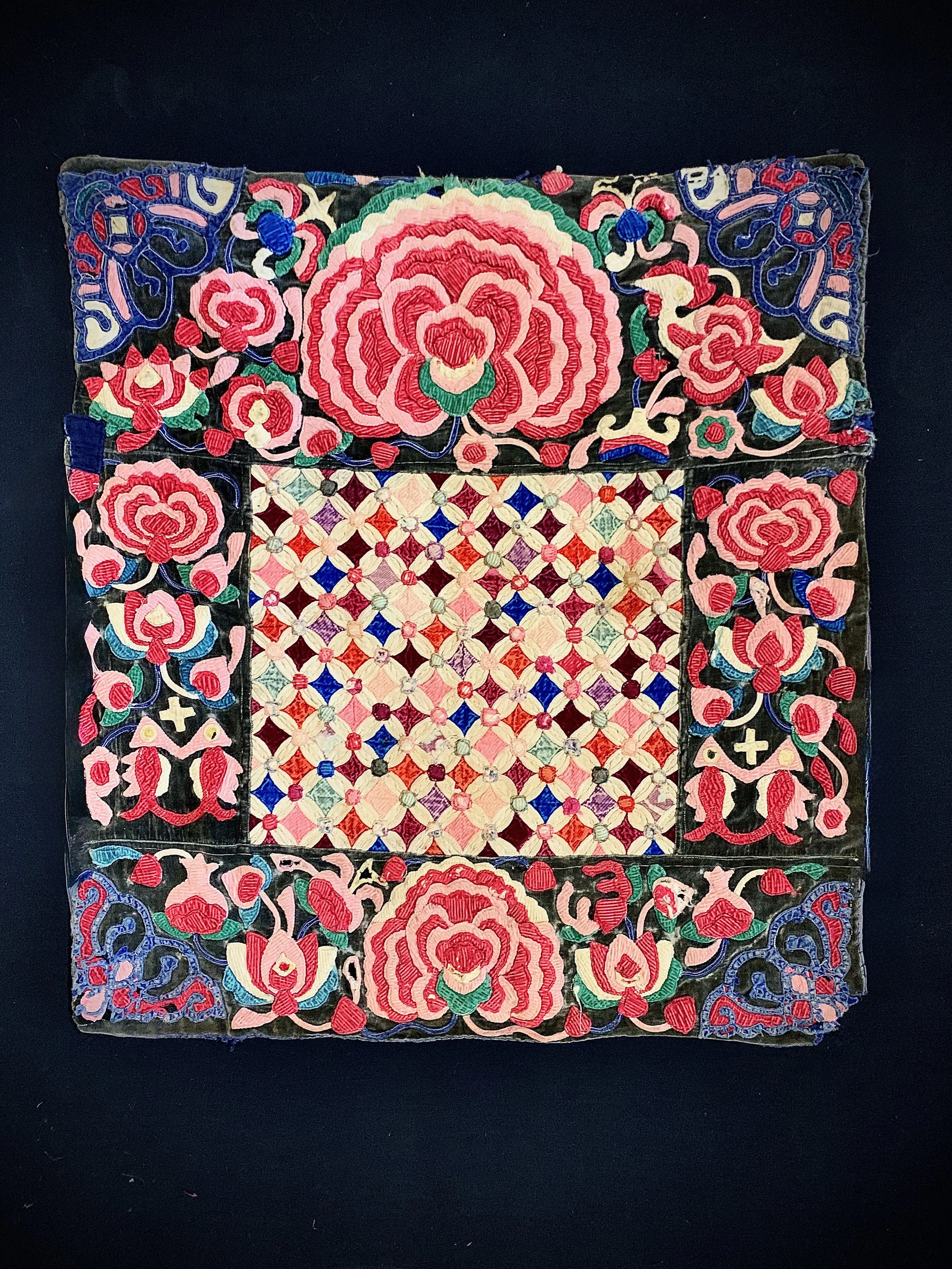
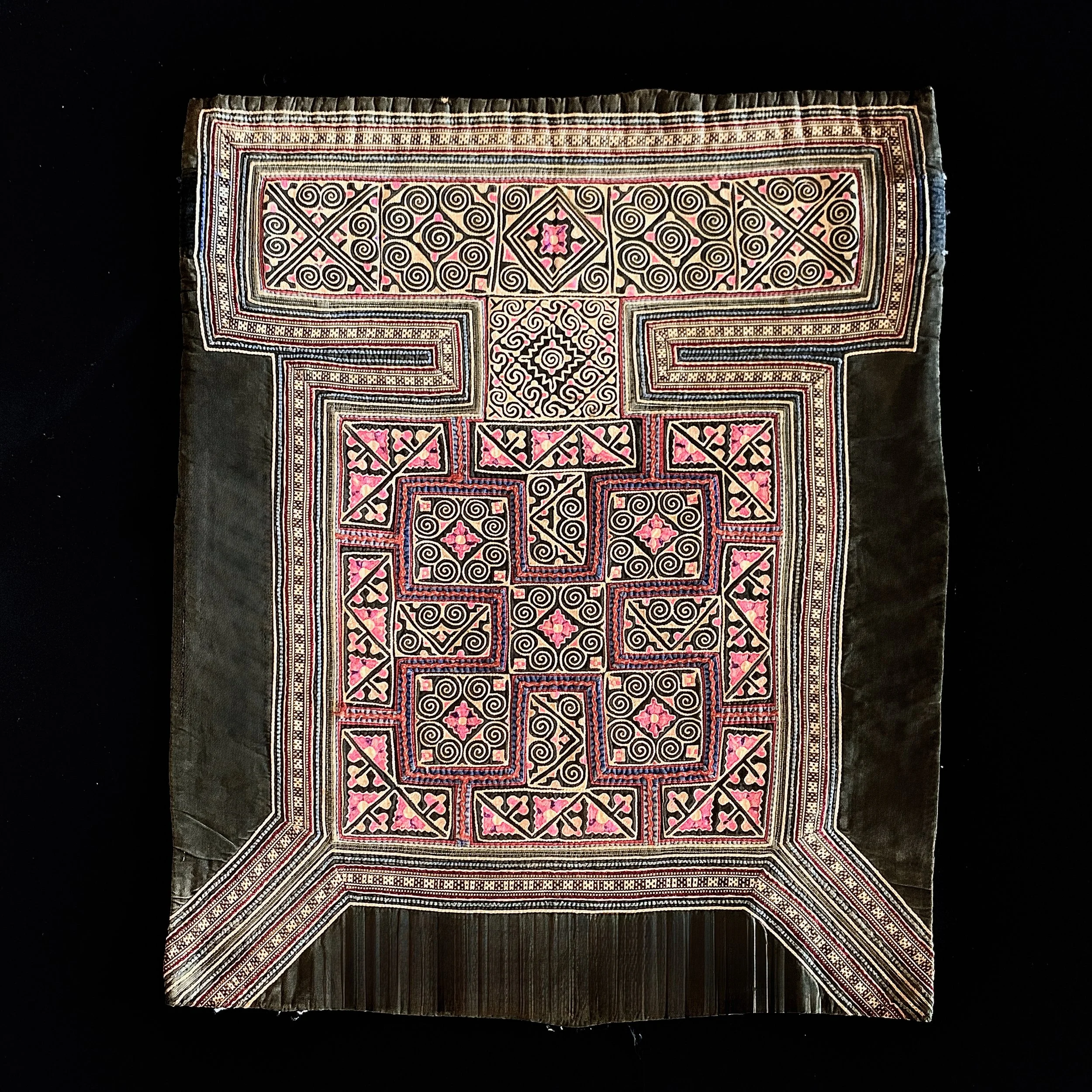
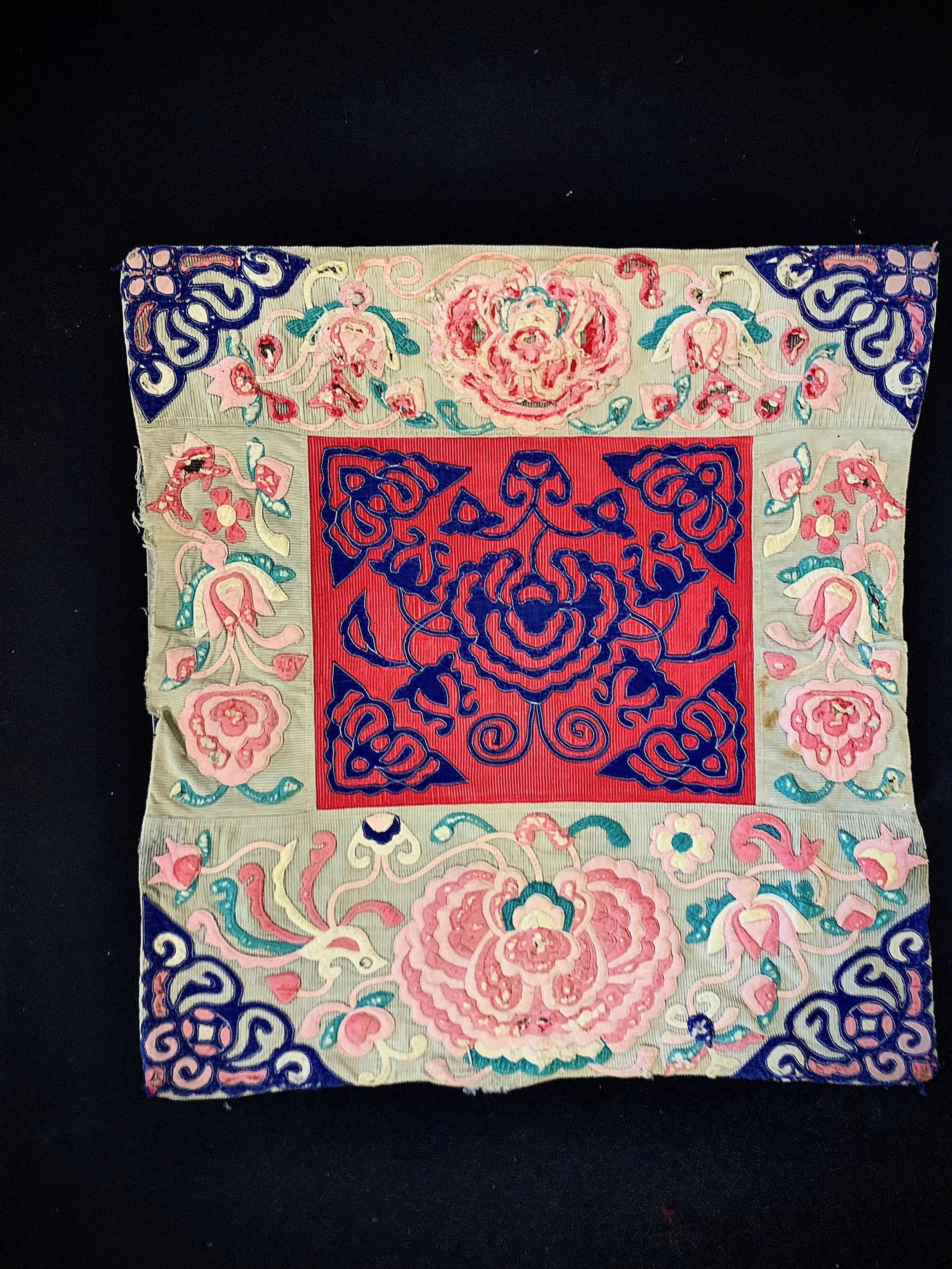
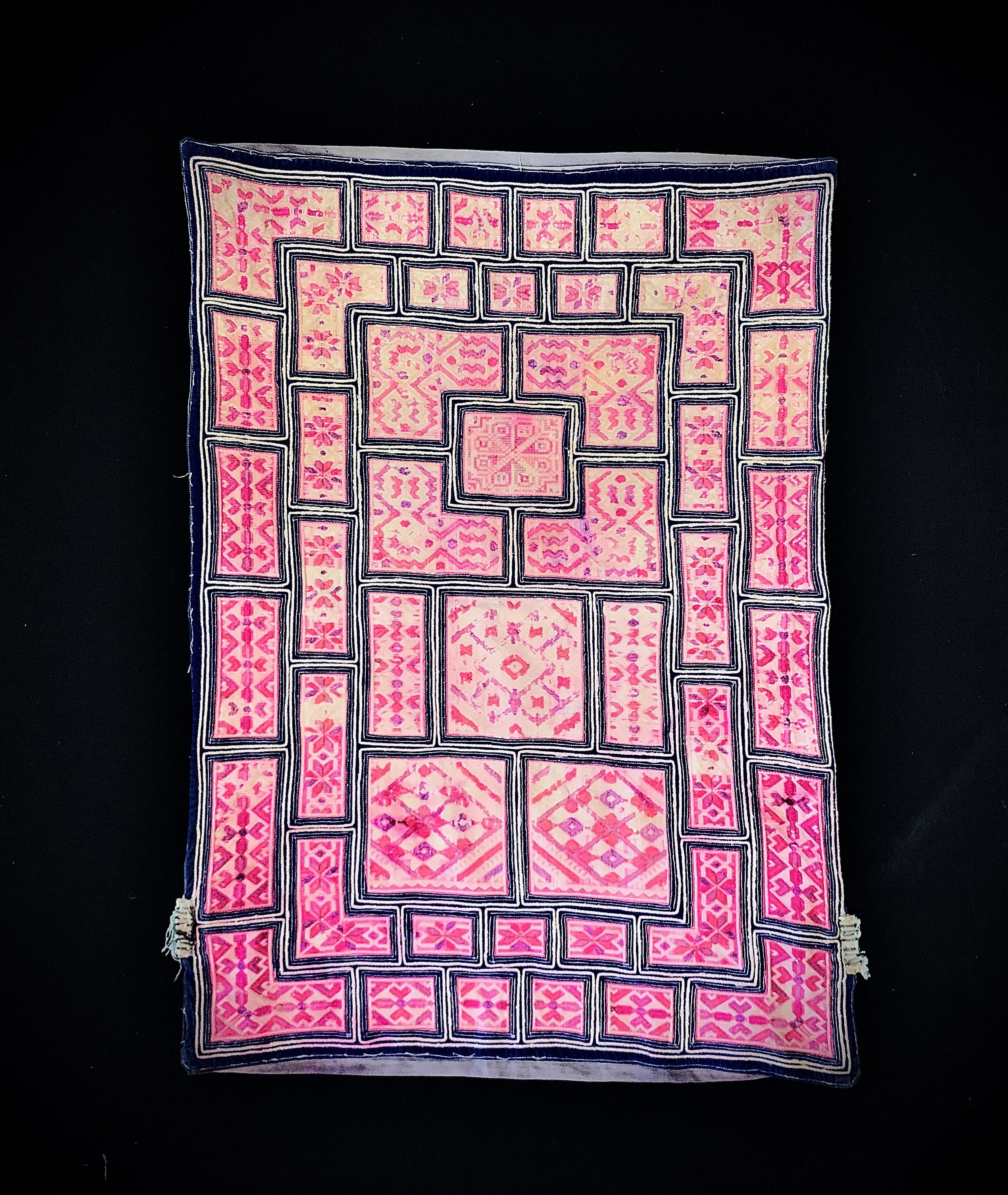
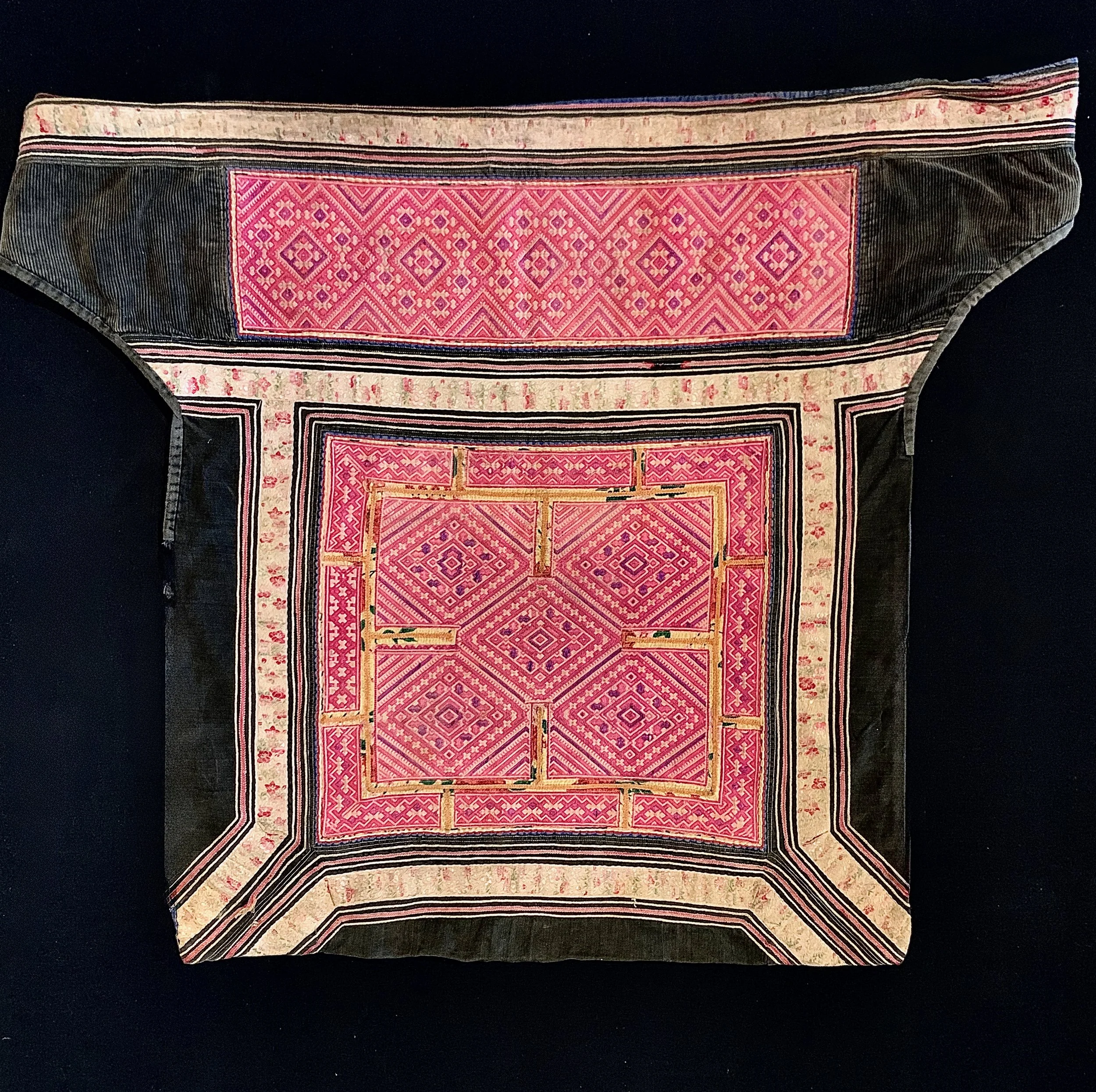
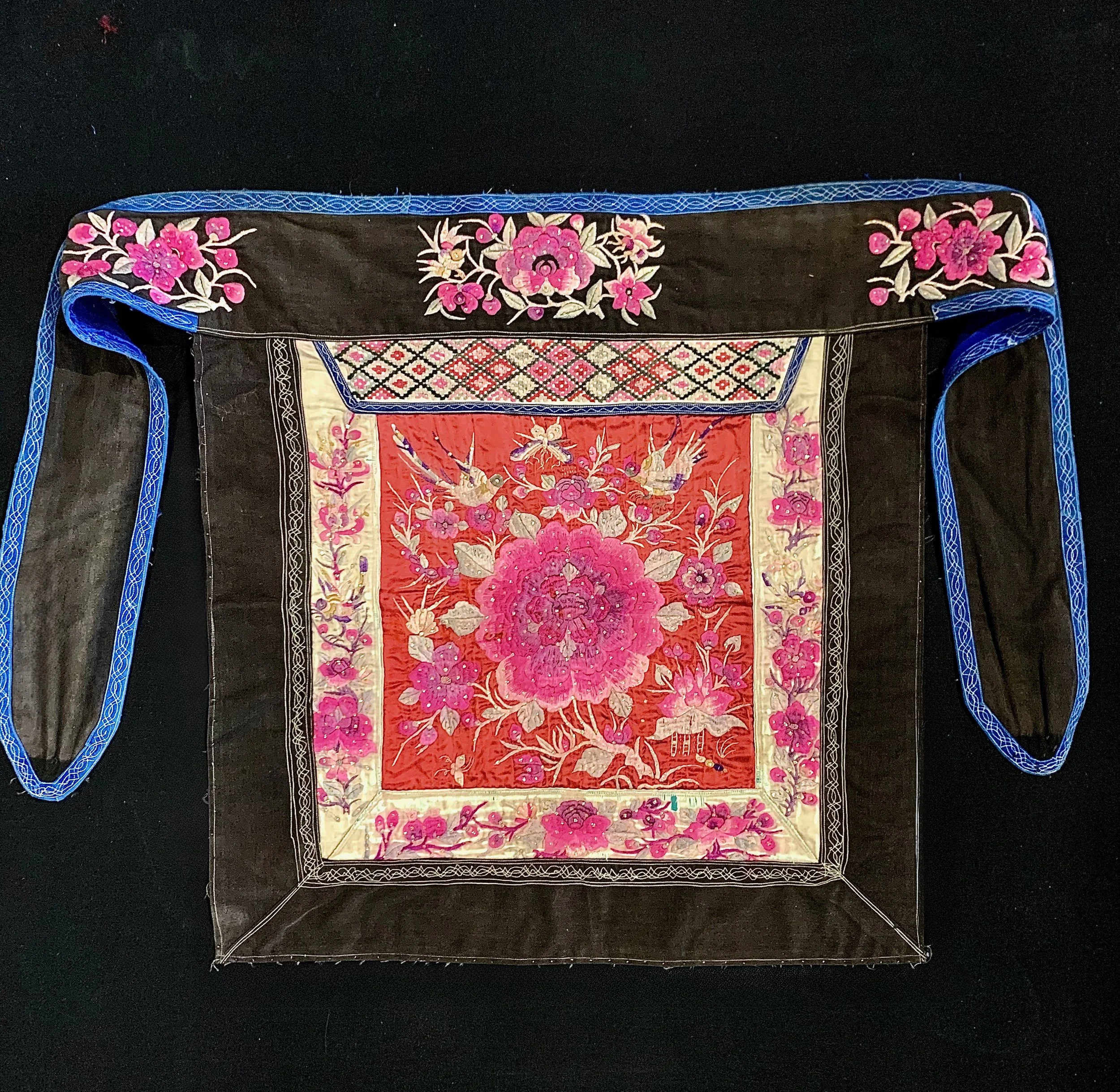
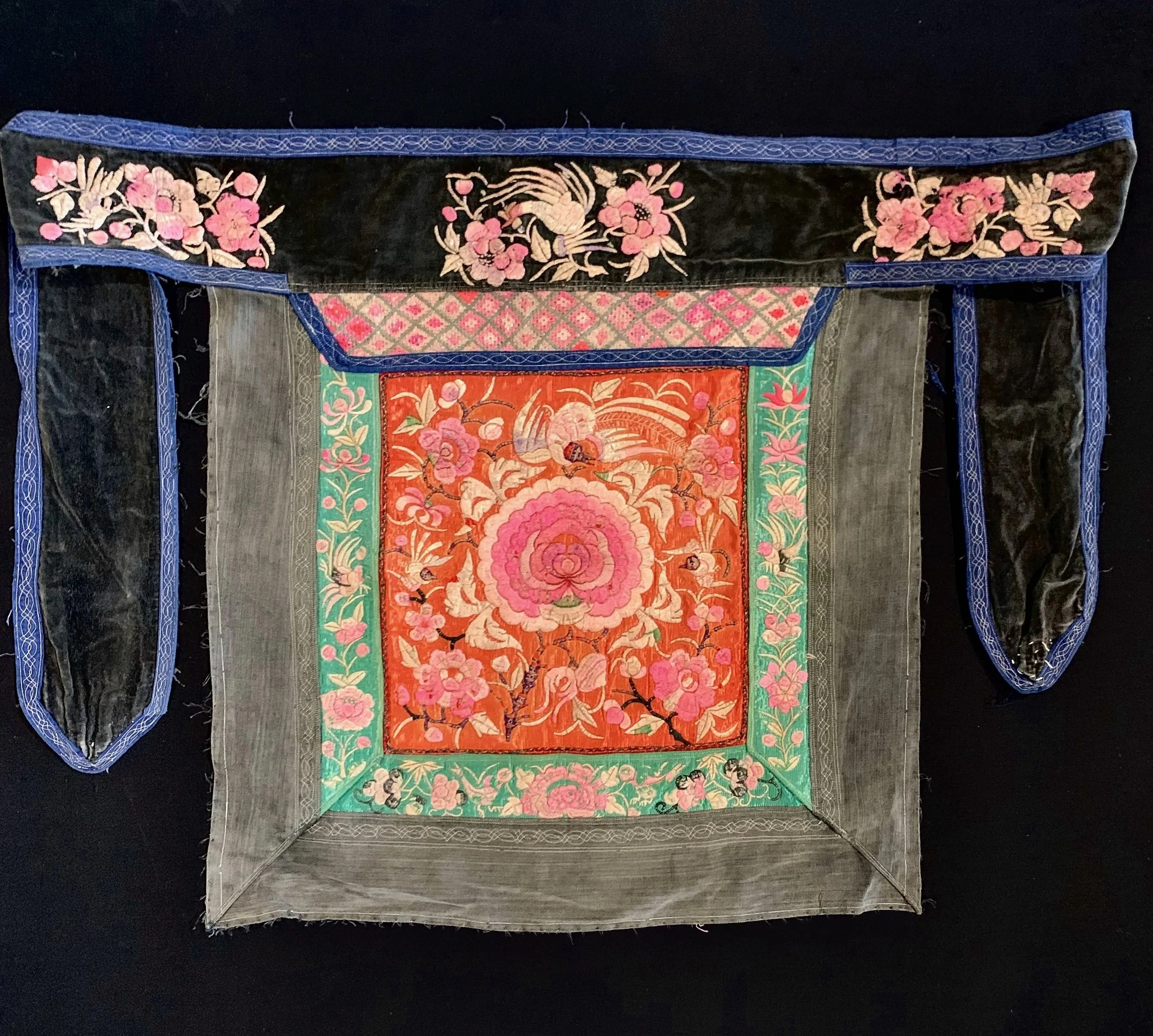
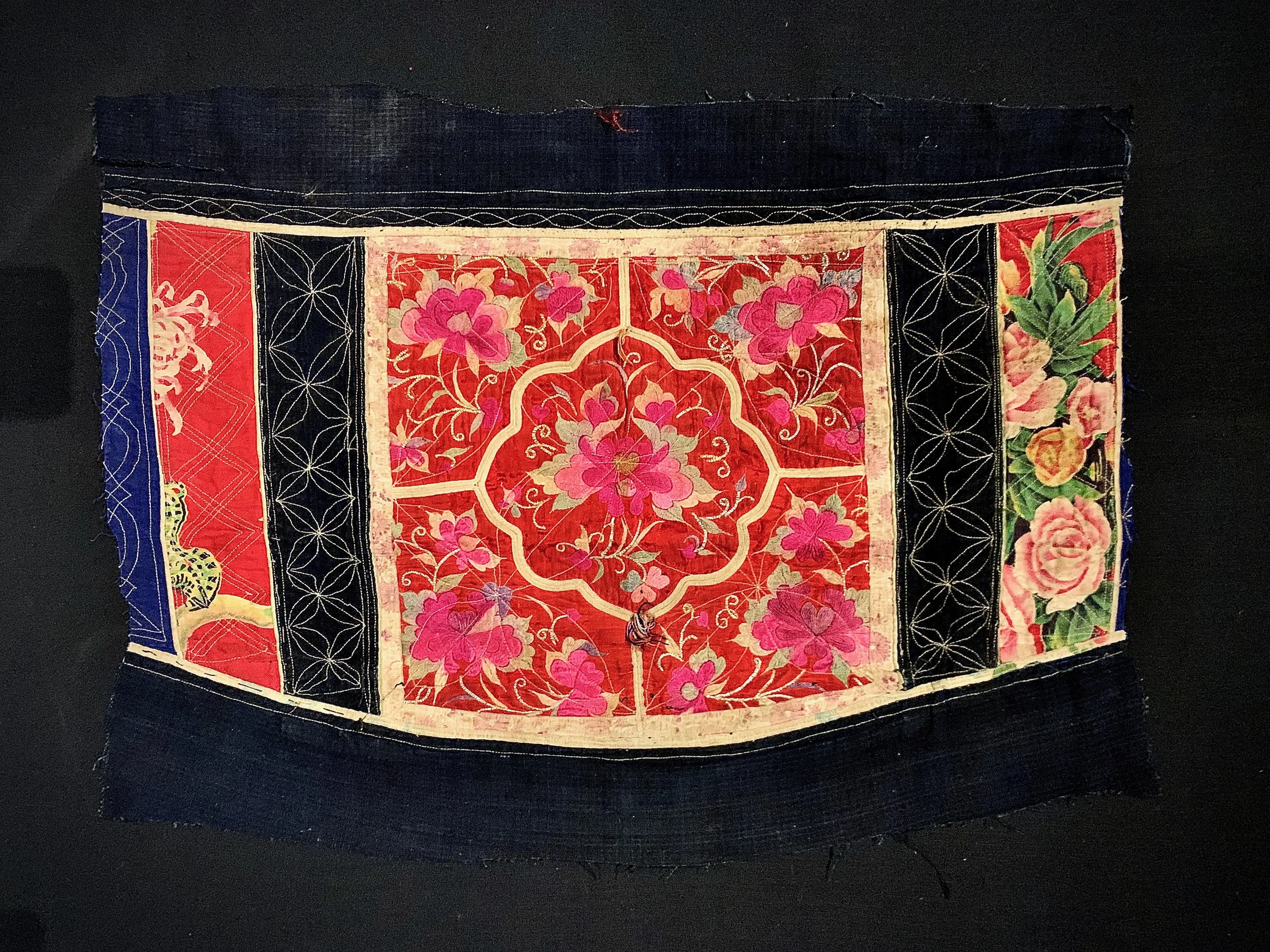
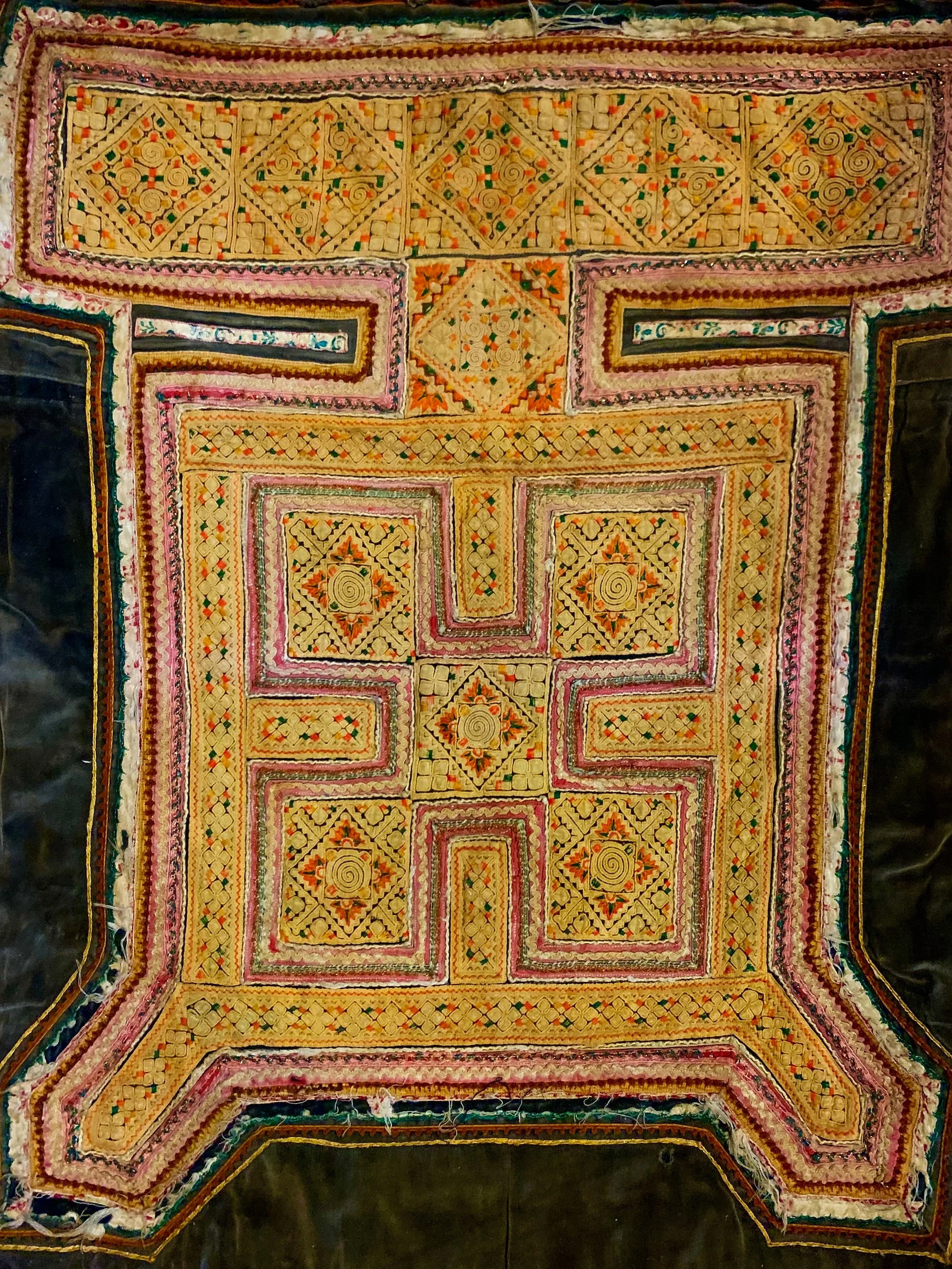
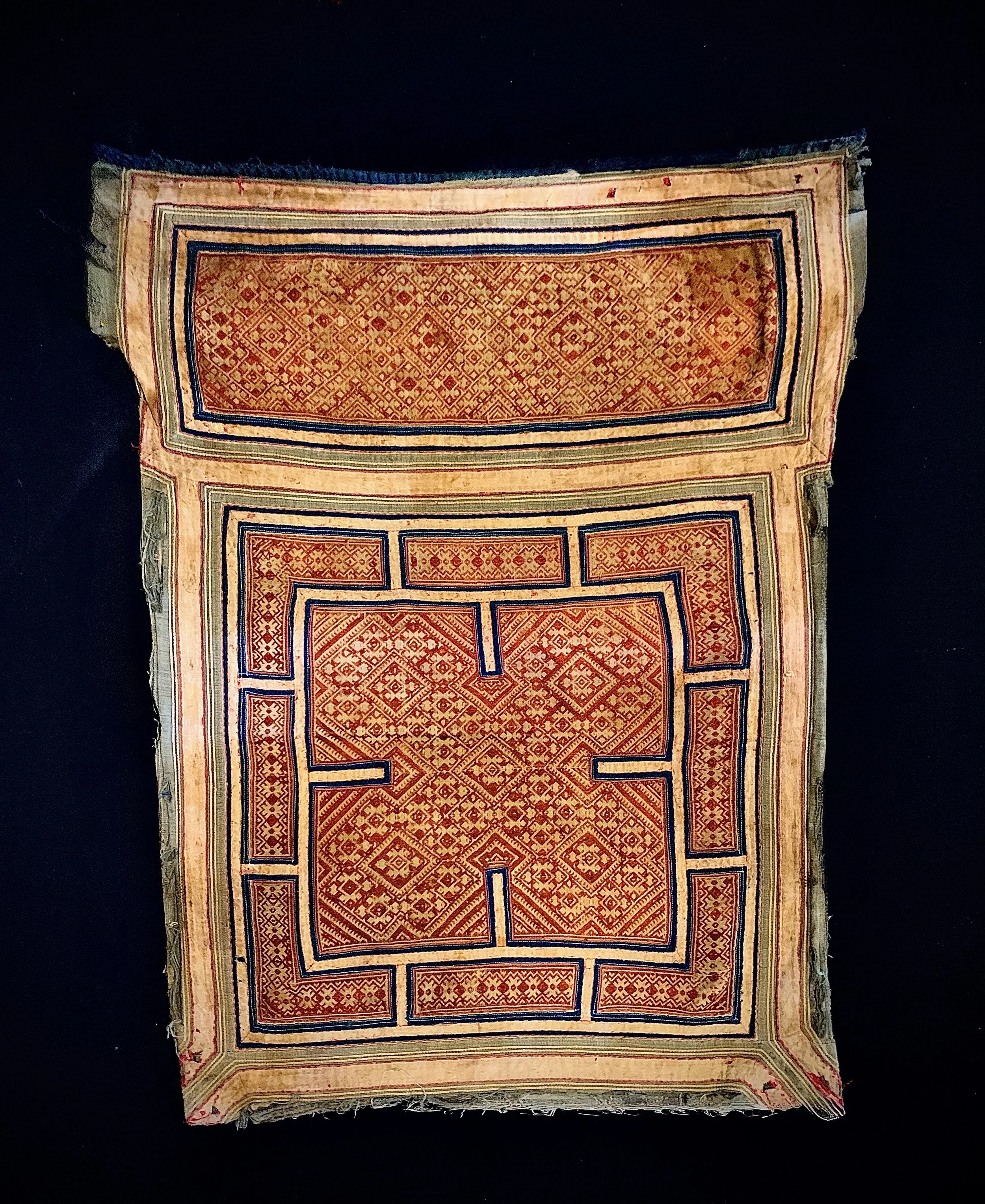
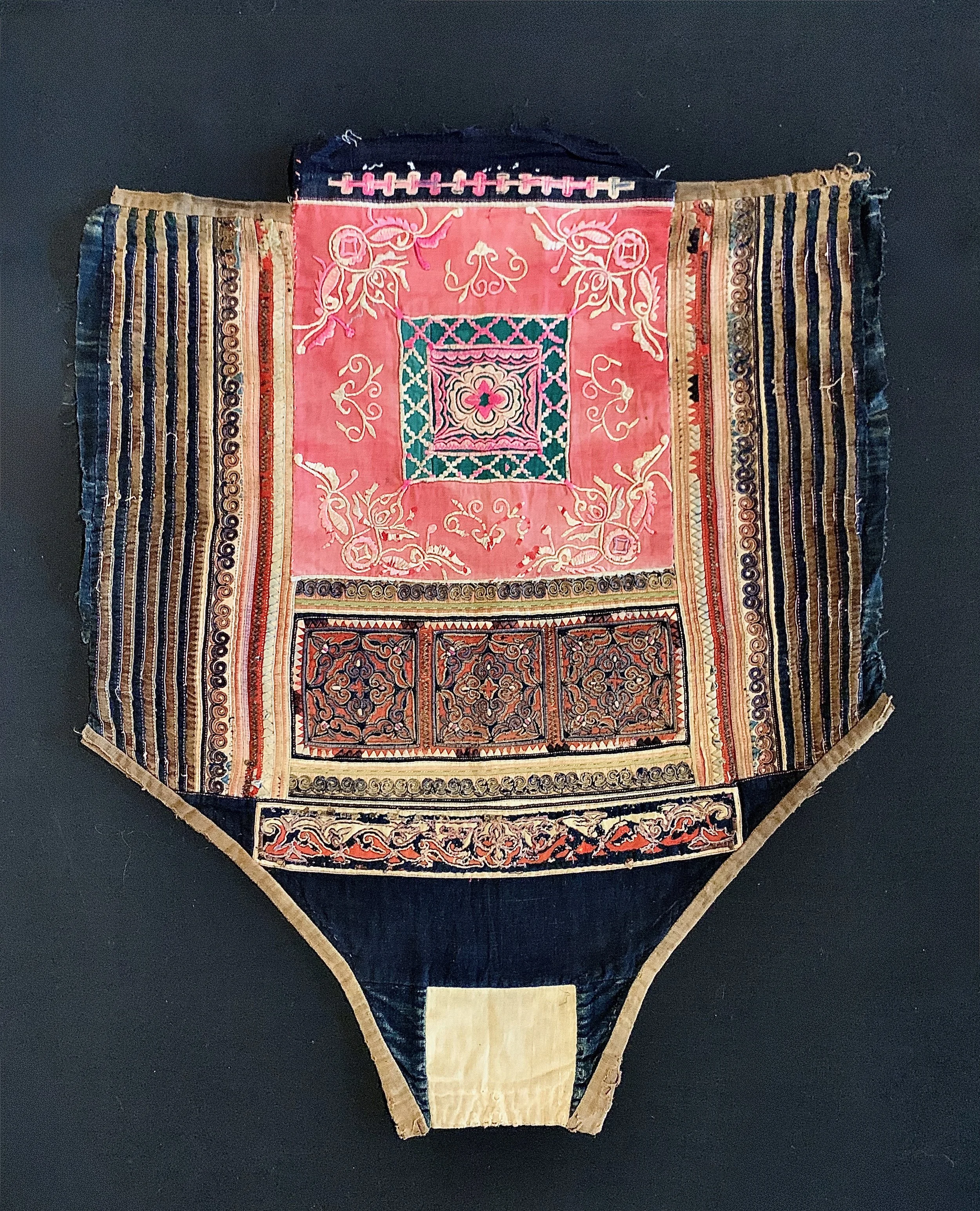
Baby Carriers – GOLDEN TRIANGLE
The antique baby carriers of the 50+ minority tribes are works of textile art infused with intention. Their sophisticated techniques, embroidery, weaving, appliqué, and natural dyes , were guided not only by skill, but by belief. Every stitch carried purpose.
Symbols of animals, ancestors, mountains, and celestial forces were placed as guardians, forming a protective field around the child. These textiles were understood as living objects: meant to shield, guide, and anchor the child’s spirit as it entered the world.
More than carriers, they were vessels of protection, memory, and continuity — holding both life and meaning against the body.
Prices and full collection of Miao, Shui and other minority people textiles by request.
Region: Southwestern China – Golden Triangle
V
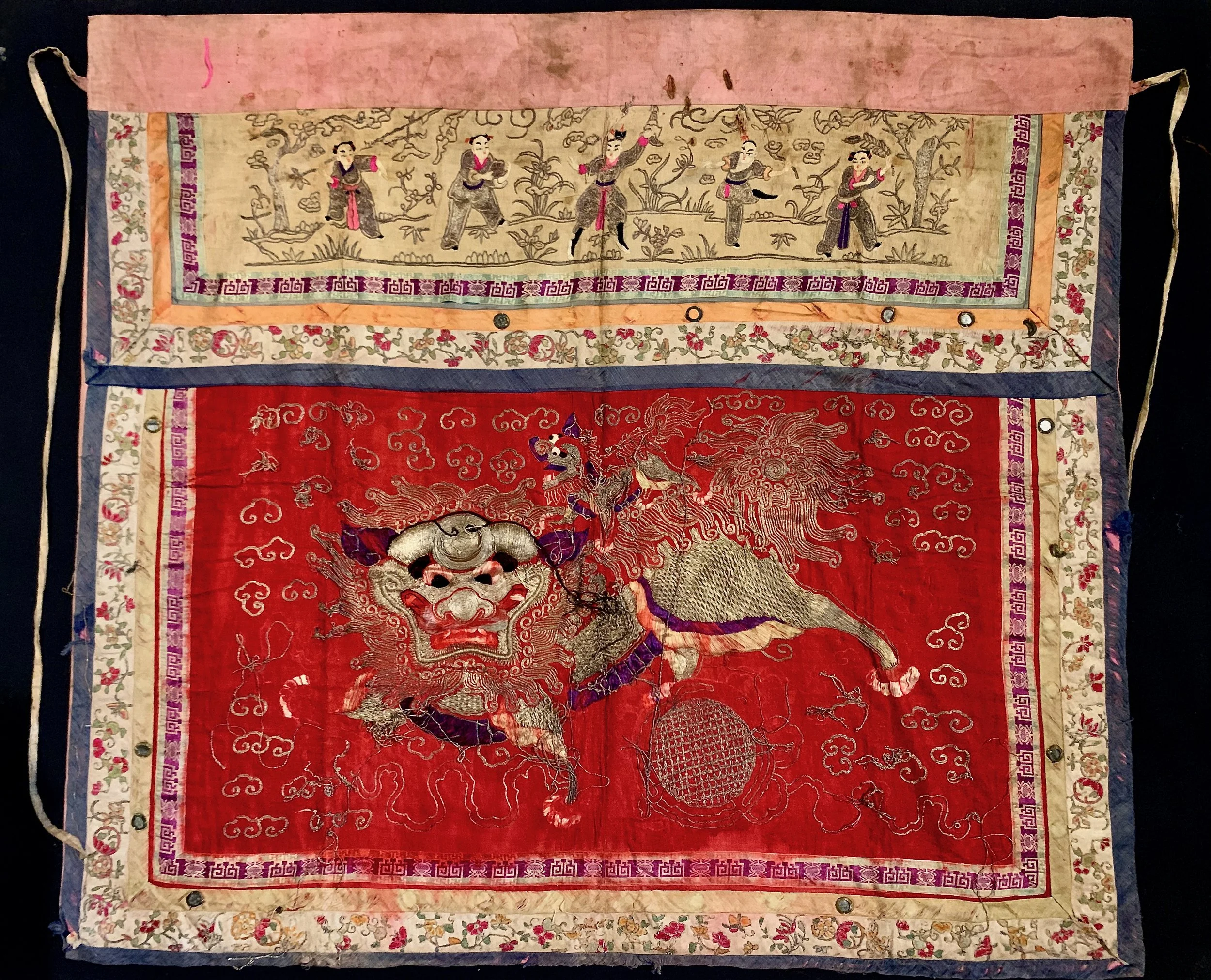
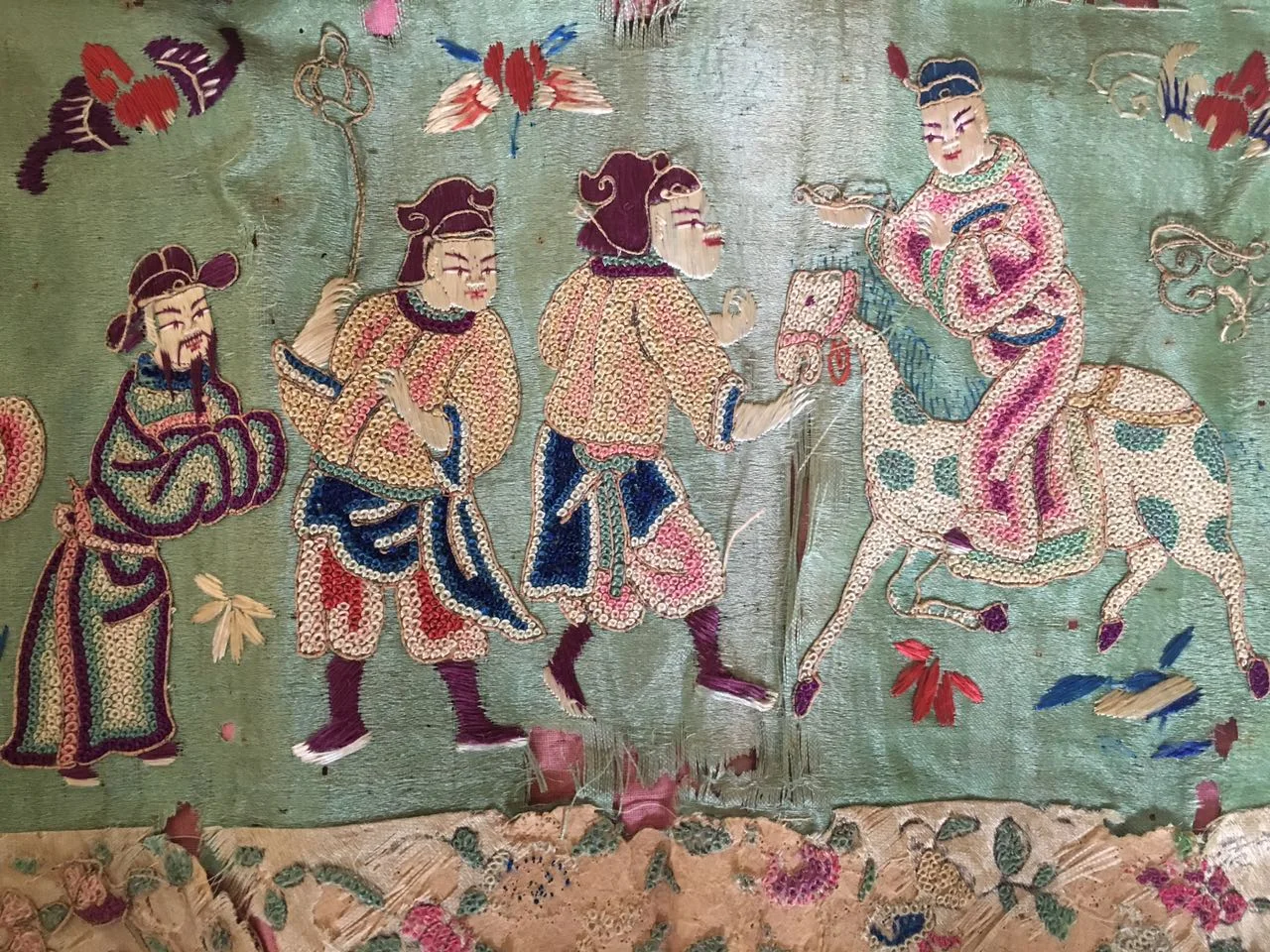
Ceremonial Textiles – Peranakan Chinese, MALAY ARCHIPELAGO
The embroidered ceremonial textiles of the Peranakan culture emerged from the domestic and ceremonial worlds of women, where beauty, devotion, and intention were inseparable. Created for weddings, ancestral rites, and household ceremonies, these textiles marked moments of transition and blessing within family life.
Their refined embroidery rich in floral motifs, symbolic animals, and auspicious forms, carried layered meanings related to fertility, harmony, protection, and continuity. Every color, stitch, and composition was chosen to cultivate balance and well-being, transforming cloth into a bearer of prayers and hopes.
These textiles were not ornamental objects, but intimate ritual companions, quietly holding memory, care, and the unseen forces believed to shape life within the home.
Prices and full collection of Chinese-Sumatran textiles are available upon request.
Region: Malaysia and Indonesia
V
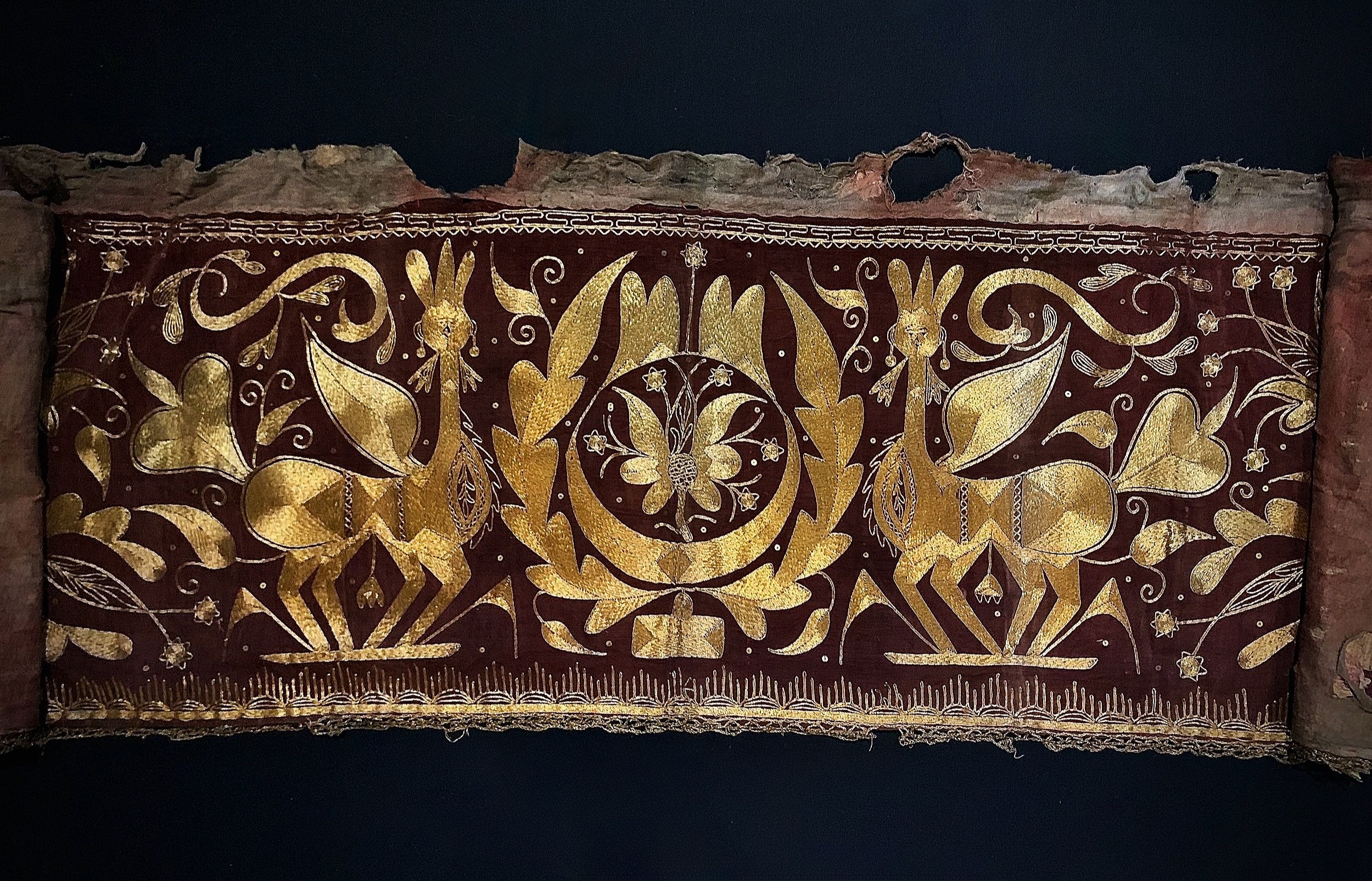
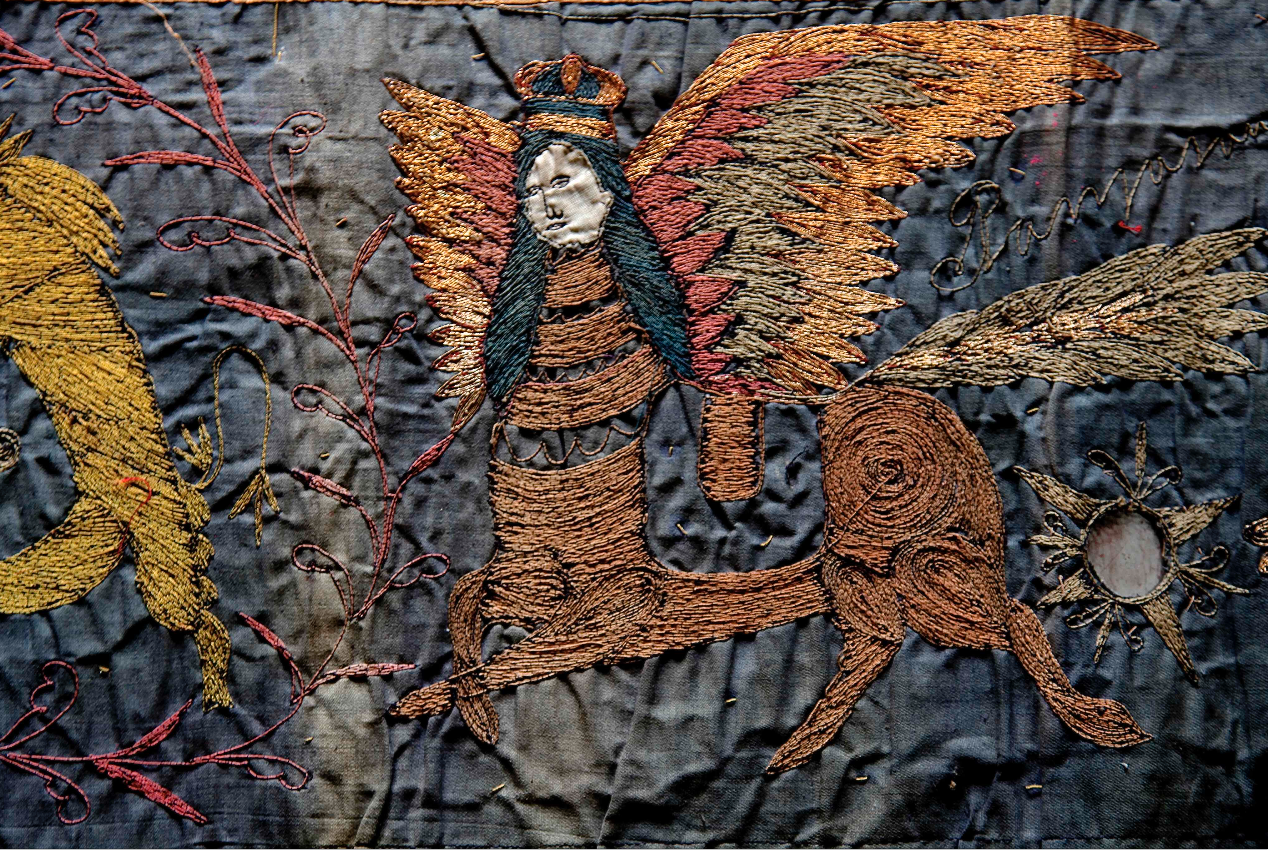
Ceremonial Cloths – MinangKABAU, MALAY ARCHIPELAGO
The ceremonial textiles of the Minangkabau people of West Sumatra are deeply rooted in a matrilineal worldview, where women are custodians of lineage, land, and memory. Created for rituals, marriages, and communal ceremonies, these textiles marked life passages and affirmed social and spiritual order.
Executed through intricate weaving and embroidery, often enriched with metallic threads, their motifs carry layered meanings drawn from nature, ancestral wisdom, and customary law (adat). Patterns echo mountains, plants, and cycles of growth, expressing harmony between human life, the natural world, and the unseen.
More than adornment, these textiles functioned as ceremonial anchors, holding authority, protection, and continuity within the fabric of Minangkabau society.
Prices and the full collection of Sumatran textiles are available upon request.
Region: West Sumatra, Indonesia
V
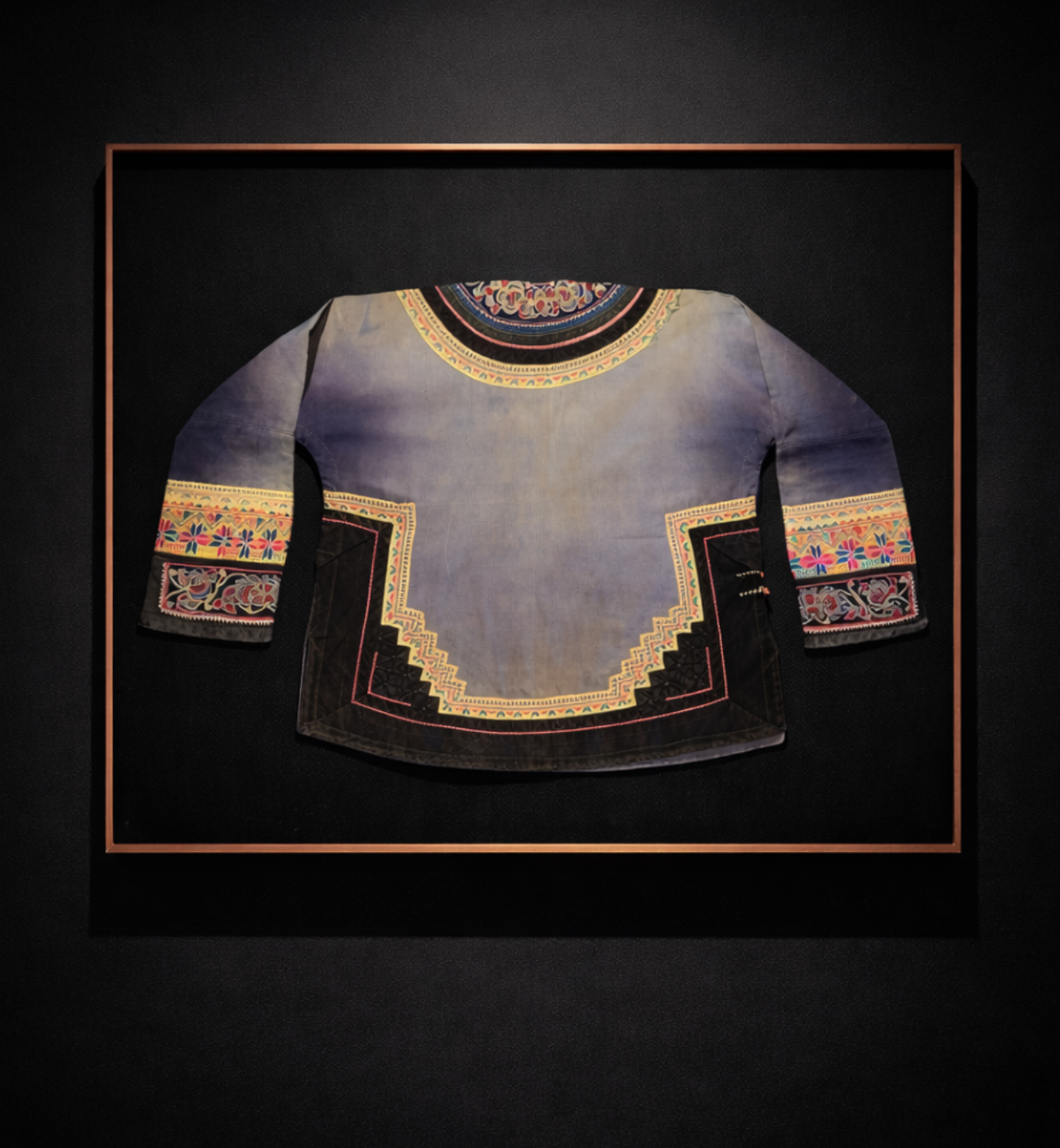
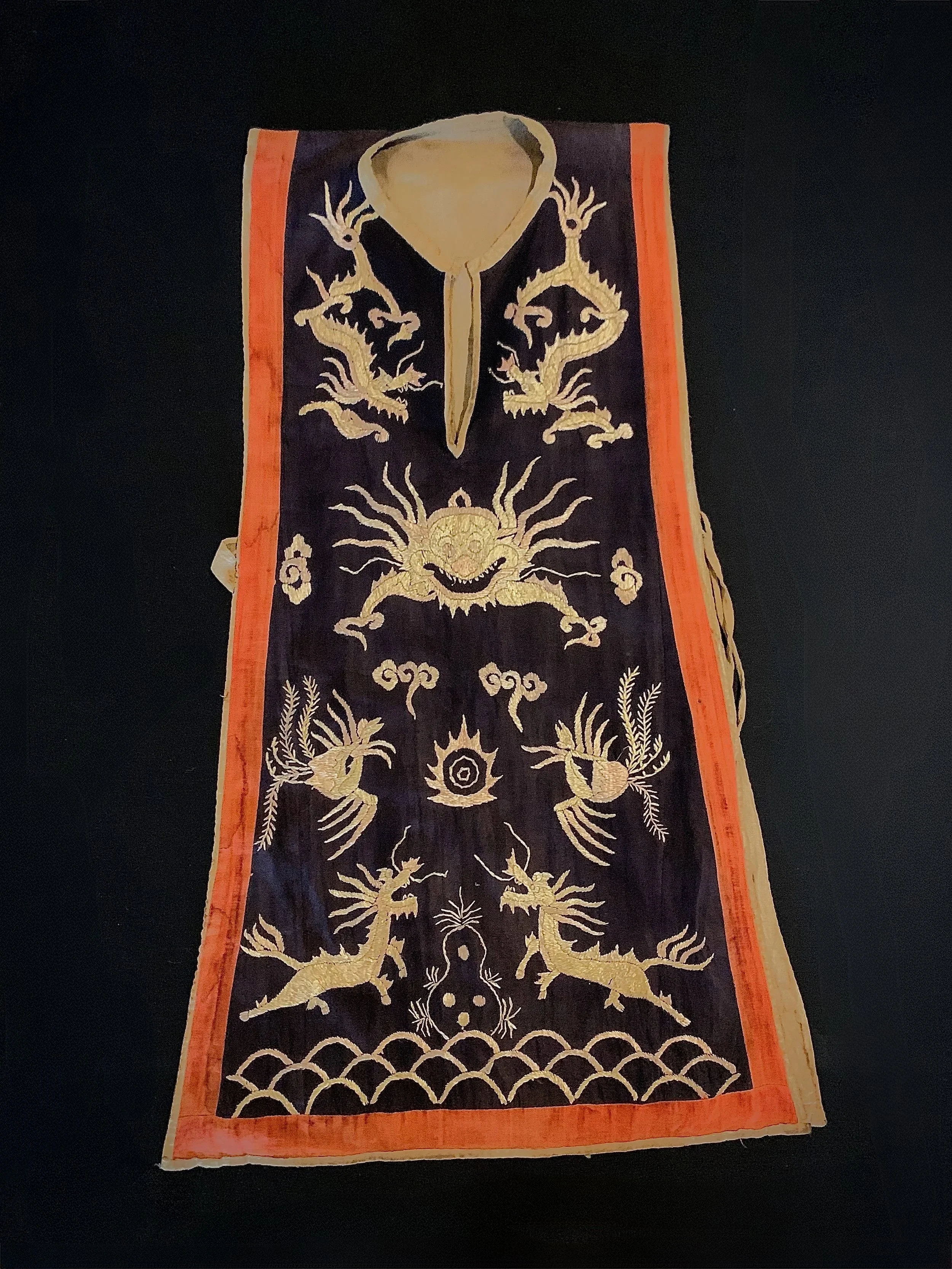
Traditional Garments – GOLDEN TRIANGLE
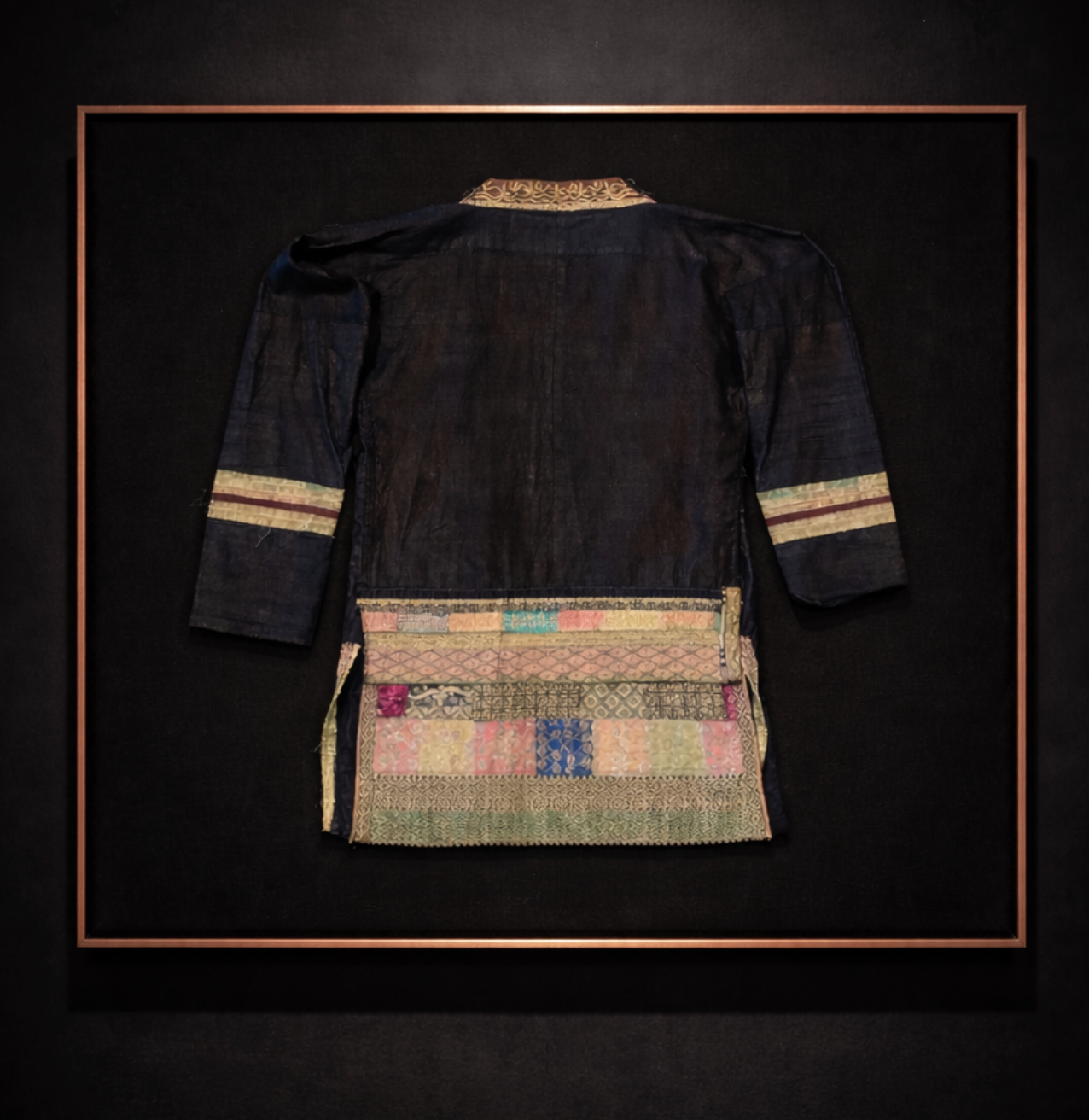
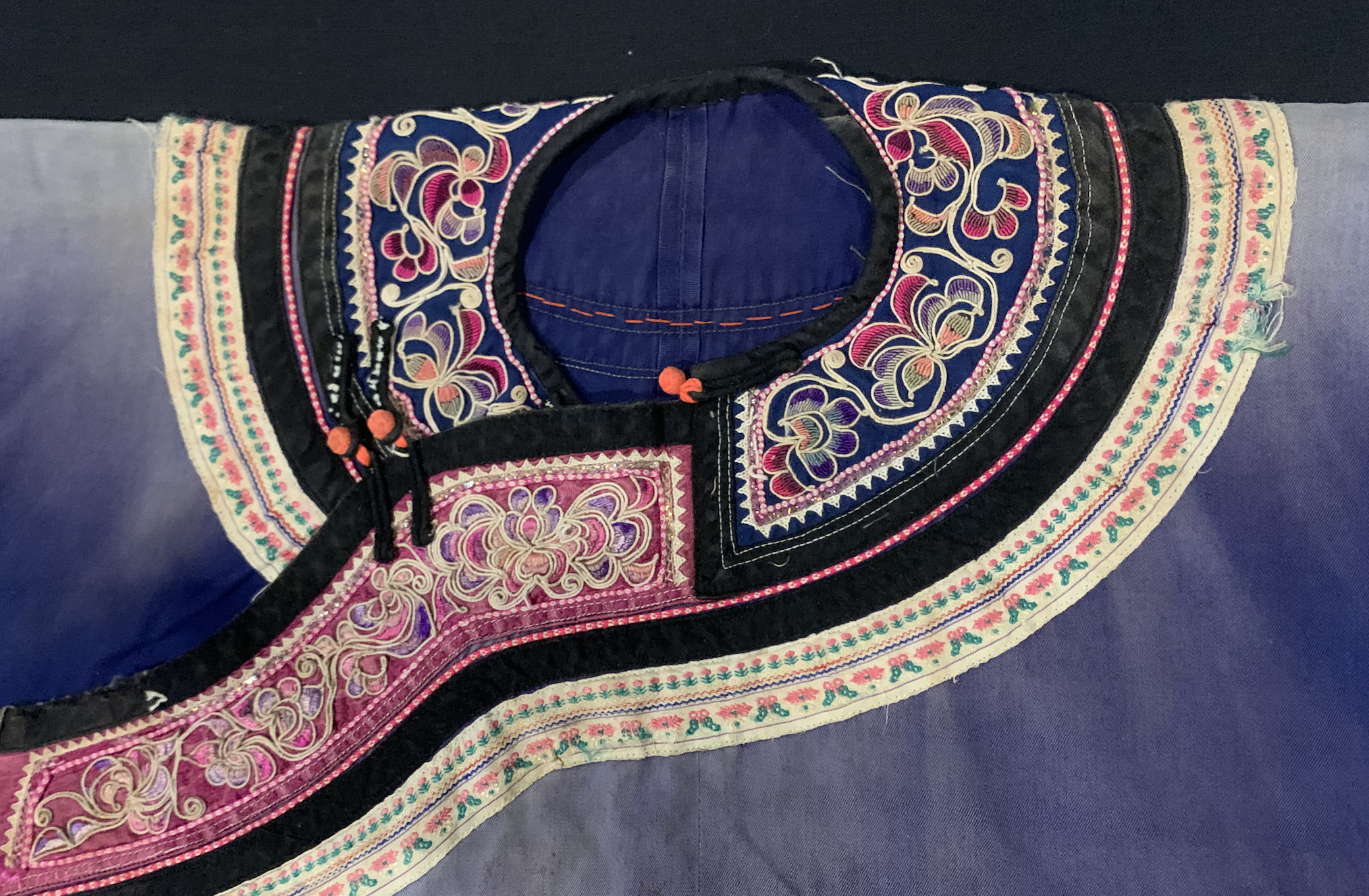
Ceremonial garments, vests, and jackets from Southeast Asia embody layers of ritual, status, and identity. Hand-stitched, woven, and embellished with dyed, embroidered, or appliquéd motifs, these garments were created to be worn at important life events—weddings, initiations, seasonal festivals, and religious ceremonies. Each piece carries regional aesthetics and symbolic patterns that speak to lineage, belief, and social role, transforming the wearer into a living bearer of tradition. Over time, these garments become cherished heirlooms, their surfaces recording generations of use, care, and evolving taste.
Prices and the full collection of garments are available upon request.